Category: Uncategorized

  • What Do You Do When God Says Wait?

    What Do You Do When God Says Wait?

    Waiting is one of the hardest things we can experience, especially when it feels like we’ve done everything right, and still, God says, “Wait.”

    What do you do in those seasons when you are asked to hold your position despite every fibre of your being wanting to move forward? How do you manage when God’s timeline doesn’t align with yours?

    Recently, I found myself walking through a waiting season—not my own—but one I had to witness in my son. I watched him wrestle with the disappointment of not getting something he sincerely wanted. His sadness pulled at my heart.

    As a parent, you want to fix things. You want to make the pain go away and shield your child from hurt. But no matter how much I longed to change the outcome in this situation, I couldn’t.

    I had no fancy words to offer him. There was no way to soften the reality that sometimes, God says, “No.”

    In these moments, I realised that my role wasn’t to fix it but to hold him through it. There’s a raw honesty in simply sitting with someone in their pain. As much as I wanted to offer solutions or explanations, my son needed my presence the most.

    Holding Firm to the Truth in Seasons of Waiting

    Holding firm to the truth that God is still God—especially in seasons when He asks us to wait—can be a challenging lesson for children and adults. I had to help my son see the bigger picture and remind him of God’s faithfulness in other areas of his life.

    Sometimes, when waiting, it’s easy to focus solely on what we want but can’t have. It becomes all-consuming, and that’s where the danger of slipping into feelings of hopelessness and despair lies. I helped my son remember the pattern of God’s goodness in his life. It wasn’t about denying his pain or dismissing his feelings; it was about acknowledging that he was hurting but encouraging him not to lean too heavily into depressive thoughts.

    As I watched him struggle, I saw myself.

    Recognising Myself in My Son’s Struggle

    It was like looking in a mirror. How he processed his disappointment, frustration, and sadness mirrored how I used to be—and sometimes still am—in seasons of waiting. Is this what he saw in me all these years? I couldn’t help but reflect on my own experiences with disappointment, how I, too, have had to fight to keep my emotions from spiralling, to manage my thoughts so that I wouldn’t blame God for the things I didn’t understand.

    I know these moments are not easy, no matter how old you are. But I’ve learned to handle them much better when fear doesn’t take over. When fear wins, I collapse under the weight of it—anger, confusion, and hopelessness soon follow. But I’ve learned to hold on to God’s promises; in those times, fear doesn’t win. I can trust that even though I don’t understand the “why” or the “when,” God is still in control.

    The Temptation to Rush God

    One of the most significant lessons I’ve learned in these waiting seasons is that fear often leads to prayer, but not the prayer that seeks to align my heart with God’s will. No, it’s the type of prayer and fasting designed to get God to do what I want on my terms and in my timeline. It’s as if I’m trying to manipulate the situation—attempting to rush God out of my discomfort, pushing for the season to end before its time.

    But I’ve come to understand that we cannot rush God.

    No amount of fasting or pleading will change His timing. That doesn’t mean prayer and fasting aren’t valuable; they are, but not when the motive is to speed up God’s plans. Waiting is not just about the outcome but what God does in us during the process. It’s a time of strengthening.

    Choosing Our Response in the Waiting

    During these seasons, we have a choice. How will we respond to the waiting? Will we be angry and bitter or allow it to mould and strengthen us? It’s not easy to sit in the tension of an unanswered prayer. I’ve been there many times, feeling the weight of waiting for something I desperately wanted, only to realise later that God was preparing me in ways I couldn’t see.

    It’s about paying attention in the waiting so that we are ready when the answer comes—or when God redirects us to something better—. We must stay prepared and remain open to God’s leading, trusting He knows what is best for us, even when it’s hard to see.

    Listening While I Wait

    One practice that has helped me navigate these seasons is “listening while I wait.” When we think of prayer, we often think of talking to God, pouring out our hearts, asking for guidance, or simply telling Him how we feel. But in the listening season, the focus shifts from talking to hearing.

    In those quiet moments, I ask God to speak to my heart and reveal what I need to know in this waiting time. Sometimes, the waiting season is a time for reflection; other times, it’s a time for preparation, but it’s always a time for listening.

    In this quietness, I’ve learned the most about myself and God. Waiting seasons can strip us of our pretences, facades, and a false sense of control. In the waiting, we face our limitations and are reminded of our dependence on God.

    Conclusion

    Waiting seasons are hard. They test our faith, challenge our patience, and stretch our ability to trust in God’s plan. But they are also growth opportunities. When God says, “Wait,” it’s not because He’s withholding good things from us. He is preparing us for something greater than we can see now.

    Watching my son navigate his disappointment reminded me once again that the waiting season is not wasted time. It’s a time of moulding, strengthening, and listening. So, in those moments when God says, “Wait,” let us hold on to His promises, trust in His timing, and be open to what He is teaching us through the process.

  • Peace Greater Than Your Pain

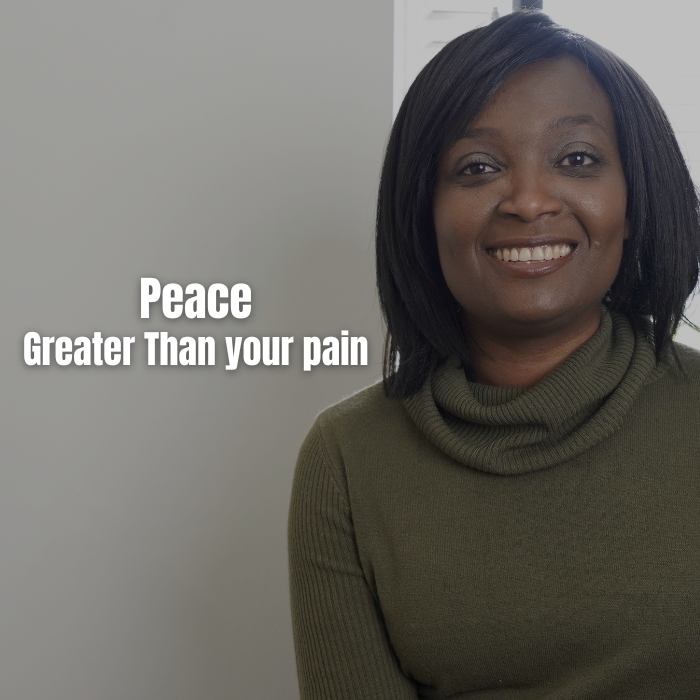
    Peace Greater Than Your Pain

    The story of Tamar in 2 Samuel 13 demonstrates many lessons that are relevant today. These lessons are applicable both for the person healing and for the individual helping others to heal.

    In this video, I talked about some of the obstacles people who experienced sexual trauma faced and how closely we can connect with the story of desolation that the Bible points out that Tamara lived with.

    I also mentioned my journey of healing – you can read more of my story in my book Shattered But Not Borken. You can use this LINK to learn more about my story.

    Watch the video below:

  • Success Often Lingers Just Beyond Our Greatest Adversity.

    As I listened to my sister telling the twins the story of the day they were born, I too slipped into reflection. It’s their birthday; they are 14 today, and it’s a tradition with my family that each sister that was present would ring to say happy birthday and tell their version of the birth story. The children love hearing these stories even though it happens every year.

    As they talked, I reflected on the day that changed many things in my life for better. The day the twins were born was hazy. I had two doses of morphine and two doses of epidural. I survived labour mostly in a daze of drugs. I had decided to have the twins by natural birth, but I had no idea what that entailed. In retrospect, I should have asked more questions. But you don’t know what you don’t know.

    I started labour on the Monday during supervision, and I didn’t want to call the hospital because whenever I do they always told me to come in. I was having twins and one was not developing as fast as the other, so they checked me every two weeks. This new pain I was feeling came suddenly, but I was so used to being in pain that I didn’t think it was labour. 

    My water broke, but it was nothing like in the movies, so I didn’t know what was going on. Instead of phoning the hospital, I rang my friend who is a midwife. She told me to go to the hospital, I disagreed and went home. I didn’t sleep that night.

    I woke up Tuesday morning after a few hours of fitful rest and went to the toilet and screamed. I rang the hospital and I was told to come in and I wailed again. They sent the ambulance; two came-one first responder and another ambulance. I was still screaming when they arrived.

    We reached the hospital and met a grumpy, stern midwife, I wasn’t going to be okay with her, but luckily for both of us, the hospital didn’t have enough beds for twins and sent us to the other hospital in Leeds. The nurses and midwives were utterly different.  

    Labour stalled and then continued around 5 pm that evening. The twins arrived at 2 am after another course of epidural.

    Wednesday – I was moved to the ward and the children were taken to me. After a couple of hours, the consultant came to tell me that my daughter had to return to the special care unit because they found a problem with her. I cried for the three weeks she was in the hospital.

    Three weeks later she arrived home, and we were strangers. I had left her in the hospital and taken her brother home. It took years to understand what happened and what I needed to do to fix it.

    I was learning how to heal, which meant learning about me and healing my attachment injuries.

    It is incredible how adversity can uncover things in one’s own life. In trying to solve one problem, I stumbled on many others that were urgent. I am forever grateful for my children because they’ve helped me to grow beyond my wildest dreams.

    In learning how to bridge the three-week gap, I came up against obstacles in me that I knew had to be addressed.  I discovered attachment injuries and noticed that our marriage changed as I was re-traumatized by giving birth.

    I was a new parent confronted by these massive obstacles that I didn’t know how to overcome. I didn’t know anyone who healed from these injuries and so I didn’t know where to begin. Everyone seemed fine. They adjusted to parenting well and were sailing through each stage. And here I was still recovering from giving birth to twins, leaving one in hospital and struggled with intimacy. I thought for sure something was wrong with me.

    Our lives changed on so many levels the day they were born. The impact felt like our own personal earthquake. We spent many years understanding the shift and still more working through and adjusting to the life that we had. Not the one we thought we should have or the one we thought other people had.

    Realisations like this are isolating, because there is no one to talk to, and therefore it isn’t easy to gauge who can understand it.

    That was my first insight into the impact of childhood trauma on parental responses and romantic relationships. I was living it.

    Healing taught me that I could have a relationship with myself.

    My husband met a new woman after I came home. I was now a mother and his wife. 

    I met a new woman, although I didn’t know then or took the time to get to know her. Those days I was focused on being a great mother, I wanted to be like the people I saw, work tirelessly and never got tired, never complained and did all the things all the time. I quickly realized that that was not sustainable; it wasn’t even realistic for me.

    Counselling training changed my life in many ways. I was heavily pregnant as I started training; it was a life-changing journey. I purposed to use the skills to improve my life, even if I never got to work as a counsellor. I learnt to get to know me and understand, accept and love me.

    For example, the day I found out the term introvert, I felt vindicated. There were other people in the world like me. I wasn’t stuck up, frigid or any of the other names attributed to me.

    It was those realisations that helped me position myself as the kind of woman, mother and wife I wanted to be. I didn’t need to consult my husband or anyone on the changes. I used introspection, prayer and time alone with God to figure out and embraced who I was becoming. Over the years, that person has evolved, but I’ve stayed true to the core of who I am.

    Through learning and healing our attachment injuries, we can help others heal. Assisting others to form a deep connection is a considerable part of the work that we do in retreats and conferences.

    When a woman tells me she is unable to function sexually, I often hear sexual trauma and my training, coupled with the workaround self-development, help me understand the cultural context that frame that problem. 

    The work that I do doesn’t feel like work; it grows as I grow and has blossomed into a ministry that helps thousands every year to begin and continue their journeys of understanding, self-discovery and growth.

  • I saw a Therapist and you should too

    I saw a Therapist and you should too

    I decided in 2019 that one of the gifts that I would give myself was the gift of therapy. I am a counsellor and have been for several years, so I know and appreciate the value of having someone to help me process day to day challenges. 

    Despite having that knowledge the year ended, and I didn’t get a therapist. Nevertheless, I had people who I could go to for support. If I need clarity on any issue, my support system helped me find solutions.

    It took being badly burned through an accident with a hot water bottle to decide to see a therapist.

    When I got admitted to the burns unit dazed with pain, the nurses told me that there was a psychologist on staff and I could speak with her if I wanted to. I jumped at the chance.

    I didn’t know that I needed her for the burn, but I knew that if there was a psychologist available, I want to take advantage of the opportunity. It’s a rare privilege.

    Our first meeting was on day four of my stay on the ward. At that initial session, we chatted about counselling and its importance. I think we both wanted to get to the meatier stuff and decided to stop dancing around the issue. I am sure it might have been challenging for her to treat another professional, but I had no problem assuming the role of a client.  

    I am not a pretentious person and usually try not to prove myself to others. I couldn’t help myself, and I was happy to cooperate with her and allow her to help me. During the session, I learnt a lot about burnt trauma and how it would affect my family.

    After the meeting, I felt lighter and less overwhelmed; it gives a fantastic feeling of acceptance and warmth to have someone understand my thoughts and feelings. I appreciated the place where I could talk honestly about how I feel without the pressure of managing expectations of others.

    I also had a clear sense of how to help the family. 

    She was intuitive and got to the source of the issues quickly. Faster than I anticipated. I guess she is used to working short term with people and have to get to the root early.

    But most importantly, I felt safe talking about feelings. I even discovered some that I hadn’t yet acknowledged. Furthermore, the therapist helped me with the adjustments that will be necessary after a sudden and traumatic incident.

    She helped me put complicated feelings into context and helped me understand and accept that they were reasonable under the circumstances.

    I felt relieved; I wasn’t just feeling sorry for myself; the feelings were logical. The adjustment would be challenging, but I felt better prepared to tackle what lay ahead.

    I am glad I didn’t deny myself the opportunity to have someone listen to me and help me make sense of what I was feeling and thinking.

    I had two sessions that prepared me to handle my emotions, flashbacks and memories when I got home. It also made me be able to listen to my children as they talked about how they felt when they witness the incident.

    Because I acknowledged and dealt with my feelings, I was able to manage theirs. I could listen to my son in the middle of the night as I talk him down from a nightmare. He spoke about his fears and what happened to him as he witnesses the incident. He held those feelings until I got home so we could talk about it. If I hadn’t done the work on me, I wouldn’t have been in a position to hear his hurt and confusion.

    I would have sent him to bed in his confused state both of us unable to verbally express how we felt. In freeing me, I released my son. I would do anything; endure any discomfort to be able to do that for him.

    When we fail to process our issues, we are unable to help our children with theirs.

    Here are five reasons you should consider seeing a therapist.

    You will have greater self-awareness

    You don’t have to have a big issue to access counselling; sometimes, the cumulative effect of life can impact our mental health. Seeing a therapist will help you understand your experiences and assist you to put them in their proper perspective.

    Early intervention is key

    The impact of unresolved pain can cause physical problems such as back pain headaches, ulcers and stress-related illnesses. 

    Early intervention of any issue is always the best option. It is better to identify and treat problems before they become more significant issues.

    You’re going through a significant change.

    This change could be a career change, retirement, moving house, renegotiating life after or bereavement or divorce. A therapist can also help you deal with a family crisis. Any of these issues are stressful and having someone to talk with a neutral perspective can be of great comfort.

    You’re having harmful thoughts.

    Thoughts can make you feel good or bad. If you are experiencing long term negative thoughts and cannot change the course of your them yourself, a therapist can help you reframe your views and experience freedom from negativity.

    Negative thoughts can change, and you can enjoy living with positive, healthy thoughts. 

    Support

    No one person can meet your needs. Sometimes we can be stuck in a cycle that no longer work because we want this or that person to make us happy.

    In therapy, you can learn how to identify your needs and distinguish different persons who can meet those needs.

    Avoid putting yourself in a position where you are dependent on someone to do something or change for you to feel better.

    In therapy, you can share openly and honestly without being judged. The therapeutic space is a safe place for you to explore painful feelings and get support to explore resolution. This level of support is often unattainable from family and friends. 

    Sometimes it’s not safe to share certain information with family and friends. Often when people share, they feel exposed and vulnerable, and this could impact the relationship. Friends and family may not be able to contain whatever it is that you are coping with, and broken trust can be disheartening and adds to the problem. 

    The days when therapy was considered embarrassing is long gone. If you or someone you know is struggling, get the support of an excellent therapist to help you.