Blog

  • ‘NEVER’ ‘ALWAYS’, ‘EVERYBODY ‘and ‘NOBODY’

    ‘NEVER’ ‘ALWAYS’, ‘EVERYBODY ‘and ‘NOBODY’


    thought-bubble phil 413


    What does ‘NEVER’, ‘ALWAYS’, ‘EVERYBODY’ and ‘NOBODY’ have in common.  These all seem to go well with false or exaggerated thoughts.  A key part of managing your emotions will include staying in control of your thoughts and avoiding absolute statements.

    These statements can be resistant to modification therefore, perseverance should be a key feature of any strategy for change.

    ‘NEVER’, ‘ALWAYS’, ‘EVERYBODY’ and ‘NOBODY’ tend to accompany negative emotions.   It was mentioned in  my last post https://www.woundstoscars.com/controlling-negative-automatic-thoughts/ that Philippians 4:8 is one key principle to apply when trying to develop healthy thoughts.

    Whatsoever things are pure, whatsoever things are true, whatsoever things are honest….if there is virtue or praise think on those things’. Phill 4:8

    Applying this principle could mean that these absolutes will not become a part of your vocabulary.   If they already are you can begin to take steps to have them erased.  You can change your language and adopt a new way of thinking and speaking.

    Let us look at some examples of how these are manifested

    • ‘I never do anything right’
    • ‘I am always late’
    • ‘Nobody cares about me’
    • ‘Everybody is too busy to help’

    These conclusive statements are followed very quickly by negative feelings and actions.  Let us consider the impossibility of this declaration ‘I never do anything right’. It will be very difficult to have an enjoyable day after that.  This thought will trigger more thoughts of low self-worth and send you spiralling into a low -mood, depression, self-hate and bewilderment.  It is impossible to never do anything right.  Therefore applying the principle in Phil, 4:8 would help you to put your thoughts into perspective.

    Be honest with yourself

    It will be necessary for you to be honest with yourself in order to change.   You will be able to own the benefits you are getting from living in a place where negative words are a part of your internal dialogue.  You will need to be willing to abandon that position and give up those benefits in order for change to be lasting.

     What are some of the benefits

    The language of ‘I never, everybody, nobody and always’ will be reinforcing some hidden fear and may also be serving as a defence mechanism against unprocessed pain.  It may appear to be protecting you against further hurt but what they are doing is establishing dysfunctional thoughts that will lead to unhealthy behaviours in the future.  Should you internalise the thought that ‘Nobody cares about me’ this could influence isolation.  If you are of the opinion that nobody cares you will not make an effort to build relationships and work through difficult places with people.  You will deprive yourself of support and in turn, miss valuable opportunities to have a meaningful connection with others.

    Replacing the negative words

    • ‘I never do anything right’                       -I sometimes make mistakes’
    • ‘I am always late                                        -I am occasionally late’
    • ‘Nobody cares about me’                         -some individuals appear indifferent to my needs’
    • ‘Everybody is too busy to help’              -‘It is hard to find available support sometimes’



  • Controlling Negative Automatic Thoughts

    Controlling Negative Automatic Thoughts

    this is how it feels to be free

    Automatic thoughts are quiet, repetitive messages that recur about certain situations.  They are deeply rooted and are not easily detected.  Nevertheless, they have a powerful influence over your thoughts and actions.

    Negative automatic thoughts speak in an absolute manner.  Such as; ‘I will be in trouble’, ‘this will not end’, ‘there is no solution to this situation’, ‘this will break me’, ‘I am the problem’ and so on.  Sometimes these thoughts can feel somewhat impossible to defeat.  However, becoming aware of them is the first and most important step.

    How can I break them?

    We are advised in

     Casting down imaginations, and every high thing that exalteth itself against the knowledge of God, and bringing into captivity every thought to the obedience of Christ; 2Cor 10:5

    What are the guidelines?

     Finally, brethren, whatsoever things are true, whatsoever things are honest, whatsoever things are just, whatsoever things are pure, whatsoever things are lovely, whatsoever things are of good report; if there be any virtue, and if there be any praise, think on these things. Phil. 4:8

    Now that we have the advice and the guideline, let us discuss how to apply them in everyday situations.

    1. Locate consistent patterns, for example, after the negative thought, make an effort to recall what you were thinking about 15 minutes before.  Pinpointing the triggers will be crucial to your success.  this will help you highlight the trend that seeks to lead you down a road of negative thoughts.  Take note of what you see, smell, touch, listen to, read, and the people that you engaged with.  All these can help to trigger different thoughts which may then lead to negative automatic thoughts.
    2. Be on guard, after you have identified your trigger guard it faithfully.  This can be done by staying attentive to these automatic thoughts.   When are identified, you can begin to challenge them.
    3. Be honest with yourself, how is this negative thought pattern serving you? What are you getting in return? I can imagine your shock at this point, but the truth is you would not be doing it if you were not receiving some benefit from it.  It may be difficult to own that right now but remember, the first important step is awareness.
    • It may be serving you by reinforcing negative rules that you have. For example, an automatic thought might be ‘I will be in trouble’ and therefore to stay out of trouble you may create stories or embellish things a little to prevent the trouble that you imagine will happen. You might feel this is justified as it is planning ahead.  Nonetheless, if were to examine the perceived trouble from your automatic thought it may well be a fear that has no grounding in the here and now.

    Applying the rules above!!

    • Is this true?

    It is not on this occasion as you are trying to guess what might happen in the future.

    • Is it honest?

    It is not honest,  no event have occurred that can justify the thought.

    We could cite more examples but I am sure the point is clear.  Apply these guidelines to your negative automatic thoughts and take control of your thought life today.

    My e-course  will delve more deeply into the subject. COMING SOON!!!!


    Overcoming Negative Thoughts


  • Are You Running on Empty

    Are You Running on Empty

    multitasking resize

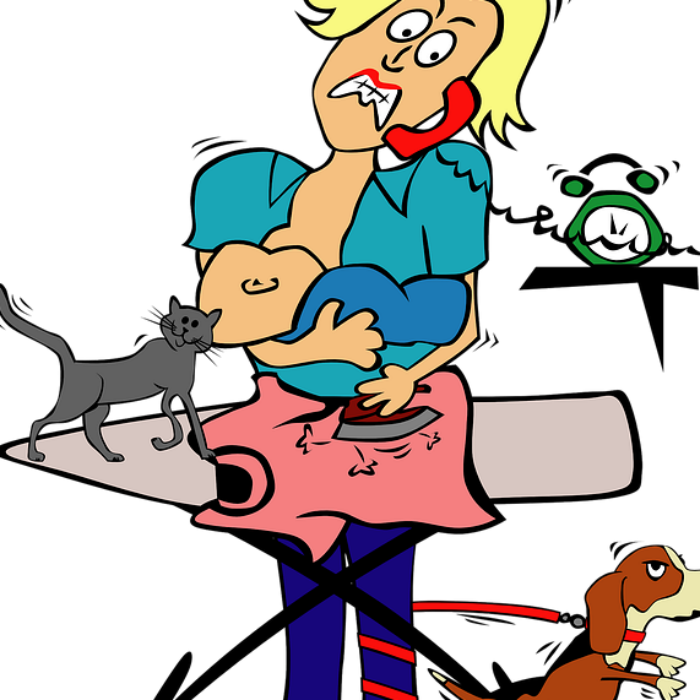
    It was a familiar story, I had heard it many times, some of it resonates with me and so I listened partially until she said the phrase that got my full attention, she said ‘I wanted to be the perfect mother’.  I was fully awake then and completely engaged. ‘The perfect mother’ what is that? Do you know what it will look like when you arrive there, I asked?  For many the perfect mother/woman means working a full-time job, climbing the career ladder, be present for homework, and serve home-cooked gourmet meals.  Do all the cleaning, be available for hubby and do it all again the next day.

    While this is happening one myth keeps this woman firmly trapped and in her place unsuccessfully trying to keep up with the pace she has set herself.  This myth has been perpetrated by women for centuries and today’s 21st-century woman is no exception.  Have you guessed it yet? Yes that is right ‘other women cope therefore I should be able to cope as well’

    I recognised the trap it is one that I tried very hard to steer clear of.   I have learnt to settle for ‘the good enough, present and emotionally available mother’  I realised few important things that changed my perspective.

    If I am not well my children and family will not be able to function as I want them to.

    It is important for the children to have a mother who was well and able to be there for them.

    I am important and I need to treat myself with respect.

    The perfect mother did not exist.

    Signs you are running on empty?

    • unable to identify your needs?
    • Constantly tired?
    • Neglect self-care?
    • Do not engage in a hobby? Or recreational activity.
    • Having difficulty sleeping?

    If you are running on empty here are some ways to regain control

    • Do you. this is not selfish, it is strategic.  You cannot neglect your needs and still function at your optimum.
    • Give yourself permission to take a break; this might mean having a takeaway or going to a restaurant for a meal.
    • Give hubby the opportunity to help.
    • If you are a single parent trying to juggle all the above on your own, there are still things that you can do to love and look after you. This will greatly benefit your children.
    • Have meals with the family. Do not use this as an opportunity to catch up on the laundry or any other household chore.
    • Rest is important so plan to get 8 hours sleep every night.
    • Be able to accept that there will always be the unfinished task.

    He is a beautiful promise that will hopefully help you in the quest for balance ‘Come unto me, all you who are weary and burdened, and I will give you rest.’ Matthew 11:28


  • Repeating Past Mistakes: Family of Origin Issues

    Repeating Past Mistakes: Family of Origin Issues


    flowers give up new

    In my interview with Dr. Dunbar, https://www.woundstoscars.com/interview-with-dr-mable-dunbar/she touched on a topic that I find significant and immensely important in its contribution to healing.  I am hoping to interview Pastor Victor Marshall to talk further on this topic.  He has a workbook and a course designed around this issue.  However, until his interview, I decided to write a quick post on the topic, repeating past mistakes specifically looking at the impact of family of origin issues on healing.  I will look at the contribution family of origin issues have on emotional wounds.  Understanding it can help or hinder healing.

    What can be done to prevent the repeating of past mistakes? Is this a conscious or unconscious decision. When repeating past mistakes become unconscious does that mean we are being controlled by someone or something outside of ourselves?  What can we do to prevent this? Here is an example, of the unconscious repeating of values we learn in our family.   Have you ever caught yourself in the middle of making a statement your mother used to make?  Have you ever been told that you act like this person or that from your family?  It seems that mannerisms and facial features are not the only things that we inherit.  There are certain tendencies that seem to pass on through generations, actions that we unwittingly perform that have been plaguing generations before us.

    Repeating Past Mistakes

    In an effort to understand this topic better I attend a weekend retreat that looked specifically on breaking family of origin issues.  I needed to understand the issues in order to break the cycle.  When the test was completed I could clearly see patterns in my family of origin that had repeated in my life, that day I made a decision to pray that it will not be repeated in the next generation.

    Awareness is key

    Having an awareness of the key issues that has passed from one generation to the next is crucial nevertheless, Sometimes the things that repeat are not things we would consciously choose.  At times the things that recur are events that happened and seem repeated through the generations.

    At Wounds to Scars, we would like to resource you to deal with life’s challenges and help to equip you to prevent the repeating past mistakes.  With this in mind, we have some suggestions to help you identify and deal with the family of origin issues.  Things such as;

    • Neglect, rejection, abandonment.
    • Abuse – physical, sexual and emotional.
    • Dysfunctional relationships that exist in your families that seem to echo down through time.
    • Avoidance will not help; therefore pretending that this is not happening will not make it disappear.

    • Do not be afraid to confront the cycles that have been present in your family, especially if you see them repeating in your children. You can protect the next generation by looking at triggers, and hurts that need to be addressed and process.

    • When I saw a pattern in my family I drew a mental line in the sand declaring that this is where it ends. So far and no further.

    • Find a professional who can help you make sense of and process cycle’s that you have identified.  Get help in changing patterns and putting new healthier ones in place.