
Tag: healing

  • Making Friends as an Introvert

    Making Friends as an Introvert

    As an introvert, the most challenging part of making friends is engaging someone new in conversation or trying to join an established group. Why? Breaking the ice is problematic because it requires talking, which is exhausting and takes effort. I’m not a fan of conversing just for the sake of it; small talk, in particular, drains me.

    However, a few years ago, I realized that if I wanted to build a brand focused on helping women heal, I would need to step out of my comfort zone and embrace change. I was willing to learn how to listen to conversations I had no interest in because I cared about the people having them.

    I tried for a long time but must have engaged with the wrong people because I encountered rebuffs that could have put me off making friends forever. At that point, I considered retreating to my small, well-curated circle, where it’s safe and everyone knows and accepts my idiosyncrasies.

    Those rejections nearly succeeded in pushing me back into my comfort zone. But I was determined to reach more people and grow. I also wanted to prove I wasn’t stuck-up, unfriendly, or arrogant—labels often unfairly assigned to introverts. At that time, I let others’ opinions dictate too much of my actions.

    It’s never wise to change for others, but I must admit that proving that I was friendly influenced my decisions. With this in mind, I decided to befriend and support my husband’s friend’s wife. Even if we didn’t become close, connecting over shared interests like cooking and food would be nice.

    She wanted to change her diet and didn’t know where to start, so I saw this as my opportunity. I’ve been plant-based for many years and consider myself an okay cook, so I offered to help.

    I still remember the anticipation that morning in the kitchen as I made breakfast for my family and discussed vegan food. It seemed like the perfect opening. “I’m going to make myself friendly,” I thought.

    My husband, who doesn’t fully understand the nuances of being an introvert, always says, “Those who want friends must make themselves friendly.” He has many sound bites for different situations.

    So, I thought her interest in veganism was an excellent opportunity and said, “Since you work near our house, maybe we could meet for a drink sometime. I’d be happy to share some recipes and tips.”

    At that moment, it felt like the air left the room. We looked at each other, and I saw a fierce look in this woman’s eyes. My gut told me what was coming next—it was a feeling I’d experienced before.

    The conversation went like this: “I don’t have many women friends…”

    I thought, “Me too.” But I didn’t share that this experiment allowed me to step out of my comfort zone. What was the point if it wasn’t going well? For years after one difficult rejection, I retreated to where I felt comfortable.

    I returned to the present to hear her say, “I don’t need women friends; I’m not that kind of person. I have all I need.” It felt like being kicked in the gut again.
    I smiled and said, “That’s okay.”

    Over time, I’ve realized that when women say, “I don’t have women friends,” it’s not about me. It dawned on me that I was trying to connect with the wrong people. Not everyone can be “your people.” I wasn’t asking for a deep sisterhood; I didn’t need to hear her secrets— I was asking to meet up, share recipes, and maintain an acquaintance. But I wonder if the possibility of a closer connection scared her. Was she worried she’d have to share things she didn’t want to?

    As difficult as that experience was, I learned the power and courage to put myself out there and risk rejection.

    We all probably fear rejection. It’s uncomfortable, shaming, and can be traumatic. The feelings that accompany rejection can linger for a long time. They can be messy, and some people remain in shame for years without the right tools to help them release shame.

    Rejection can stir up feelings of inadequacy, making you question your worth—especially when the people you’re trying to connect with don’t see the value you offer.

    I have learnt that no one can make me feel ashamed, and the feelings associated with rejection are not necessarily the actions of the person but thoughts I already had about myself.

    If I enter the conversation feeling inadequate, someone’s decision not to engage with me can influence feelings of shame that can make me question my value. They didn’t ask my value; I did.

    Releasing feelings of shame and choosing not to be impacted by rejection sent me processing origin stories connected to loss, abandonment, and rejection. I took time to understand the stories that shaped my understanding of myself and the stories that still existed that triggered feelings of rejection.

    Taking a closer look at those stories and doing the work to process and heal gave me the tools to make a different choice each time I feel rejected. In those moments, I could choose to accept feelings of shame or to feel something else.

    I can own the sadness associated with rejection, comfort myself, and choose to move forward. I can also tell myself why I feel the way I do and decide to release those emotions.

    Our thoughts influence how we feel, so it is crucial always to be mindful of them. Cognitive distortions, such as mind reading, can cloud judgment and influence incorrect feelings.

    Despite this, I continue to step out of my comfort zone and face the fear of rejection in my efforts to connect with women. The world is a lonely place, and many are searching for community. We can be open to genuine connections that help us and the people we connect with.

    Start your journey to wholehearted living. Join HERE
  • Sexual Abuse And Shame A Cultural Perspective

    Some years ago, I read Shame Interrupted and learnt that shame was the root of most negative emotions.

    That means emotions such as anger, fear, guilt, low self-worth, low self-esteem has one root; Shame. These are also common themes when dealing with sexual abuse.

    With help, the woman on her healing journey can identify the triggers, separate thoughts from feelings and cultivate healthy coping strategies. However, many things can compound this shame.

    Brene Brown describes shame as “the intensely painful feeling or experience of believing that we are flawed and therefore unworthy of love, belonging, and connection.”

    Within the black community, we are familiar with the message that we are ‘flawed’. Most women shame story is a personal attack on their bodies, their hair and their behaviours.

    There’s also a generational shame that influences all aspects of our lives. Though often untold, our parent’s shame stories are lived out in the home and have an imprint on our lives. 

    Living in a marginalised community plagued by inequalities makes it challenging to separate one shame story from another. Without expert help, these stories can merge into one. Culturally competent therapy can help a woman identify where the embarrassment of sexual abuse start and end?

    That intense feeling that Brene Brown described will be familiar for every black woman who’s been to school, the shops, shunned on the playground or at work. She understands implicit biases and many other experiences that send the message that you are not good enough to be here. It’s our everyday lived experience.

    In summary, as black women, it is often challenging to separate shame from sexual abuse and chagrin from being black living in a white world.

    Culture and sexual abuse

    Shame is also connected to how certain parts of black culture process abuse and receives victims. For example, growing up in Jamaica, my experience is; the victim gets blamed; it was her fault. She has the responsibility of keeping herself safe and protecting men. 

    A woman raped can ask herself questions about what she was wearing and things she could have done to protect herself before even thinking about what she needs because it is embedded in her psyche to blame herself.

    The media also portrays a sexualised version of black women highlighting specific parts of our bodies to fit the narrative they want to spin. They make some features of our bodies desirable while at the same time we can also get scorned and labelled vulgar and lose. The latter version is prevalent when the media misunderstands how some black women express themselves in dance; they label it improper.

    Shame and religion

    Humiliation is felt even in religious settings, where many things about back women’s bodies become problematic and need fixing. The message of eurocentric reform influences guilt and embarrassment in the one place we should feel welcomed and safe.

    Our shape is different. Certain clothes highlight our natural form, which is the focus of many preachers sermons. Shaming a woman for having a particular structure is neither Christlike nor appropriate.

    She is not responsible for a shape, nor can she change herself—confusion reigns when the feeling of not being good enough shows up in both religious and secular settings. 

    We feel it as our sisters gets shamed when they mature earlier than others, and she becomes the focus of men’s attention. The men never get cautioned. Instead, her body gets the blame for the unwanted sexual attention.

    Many years ago, at a retreat (not wounds to Scars retreat), a fellow attendee and I had a very intense discussion in the middle of one group session. She felt that young girls were lost and inviting attention depending on how they dress.

    She gave an example of a church elder (male) who spoke to a particular young woman he felt was not appropriately dressed.

    I felt he was out of place and shouldn’t have spoken to her.

    We had a back and forth for a while non of us were willing to give up. The discomfort in the room was palpable no one wanted to join or give an opinion either way, and I feel sometimes that’s the problem. Young black girls are often unprotected and used as an example of what is wrong. Older women who have also grown up in a culture of shame sometimes join the conversation not to defend but to rebuke and reinforce the message that she’s unworthy, not good enough.

    Any censure or even a notice of her body can damage a young woman carrying the shame of sexual abuse. These messages about her form in dress or someone negative comment about her body adds another layer of confusion. Healing becomes complex, and therapy is needed to unravel shame from the abuse.

    Churches often neglect to deal with their lack of awareness around race and used the same Eurocentric culture as the measuring stick for all women. Modesty gets viewed through the lens of what looks good on our white sisters.

    In this environment, a black woman can be blamed for her body looking different in the dress prescribed by the organisation. She doesn’t feel able to break free from that culture for fear of being ostracised, so she tries to conform, denying the feelings, not knowing what to do with them or even if it’s “right” to feel them.

    It takes a culturally competent counsellor to understand these nuances and appropriately help a black woman process sexual trauma.

    A young woman dealing with the shame of sexual abuse can get re-traumatised when men, whether in leadership or not, chose to comment on what they are wearing

    Men who show no interest in their lives beyond condemning or accusing.

    That makes shame complex for many black women dealing with the pain of sexual abuse. In this environment, it is challenging to differentiate one shame from the next.

    Sexual abuse, shame and counselling

    As I work with black women healing from sexual abuse, this separation of shame becomes part of the work. It is often necessary to highlight the different layers of the emotion to put the embarrassment of sexual abuse in its proper perspective. With that done, she can work at managing triggers and develop methods of coping that can help her effectively move through the pain of abuse.

    This woman maybe for the first time feeling able to talk about the shame of being black and a woman. For the first time, many are becoming aware of the guilt that they carry around their bodies. Without a culturally competent therapist, this woman can leave therapy with unresolved issues and no way of working through the shame triggers.

    In shame interrupted, the authors said

    “Shame is the deep sense that you are unacceptable because of something you did, something done to you, or something associated with you. You feel exposed and humiliated.”

    An unravelling of all these elements is vital for a black woman working through sexual abuse.

    It is natural for a victim of sexual abuse to believe that she’s to blame. The message that black women receive about their bodies makes it easy to blame themselves; this can impact her parenting, how she functions in the home, at work, and affect her ability to do life from a space of worthiness.

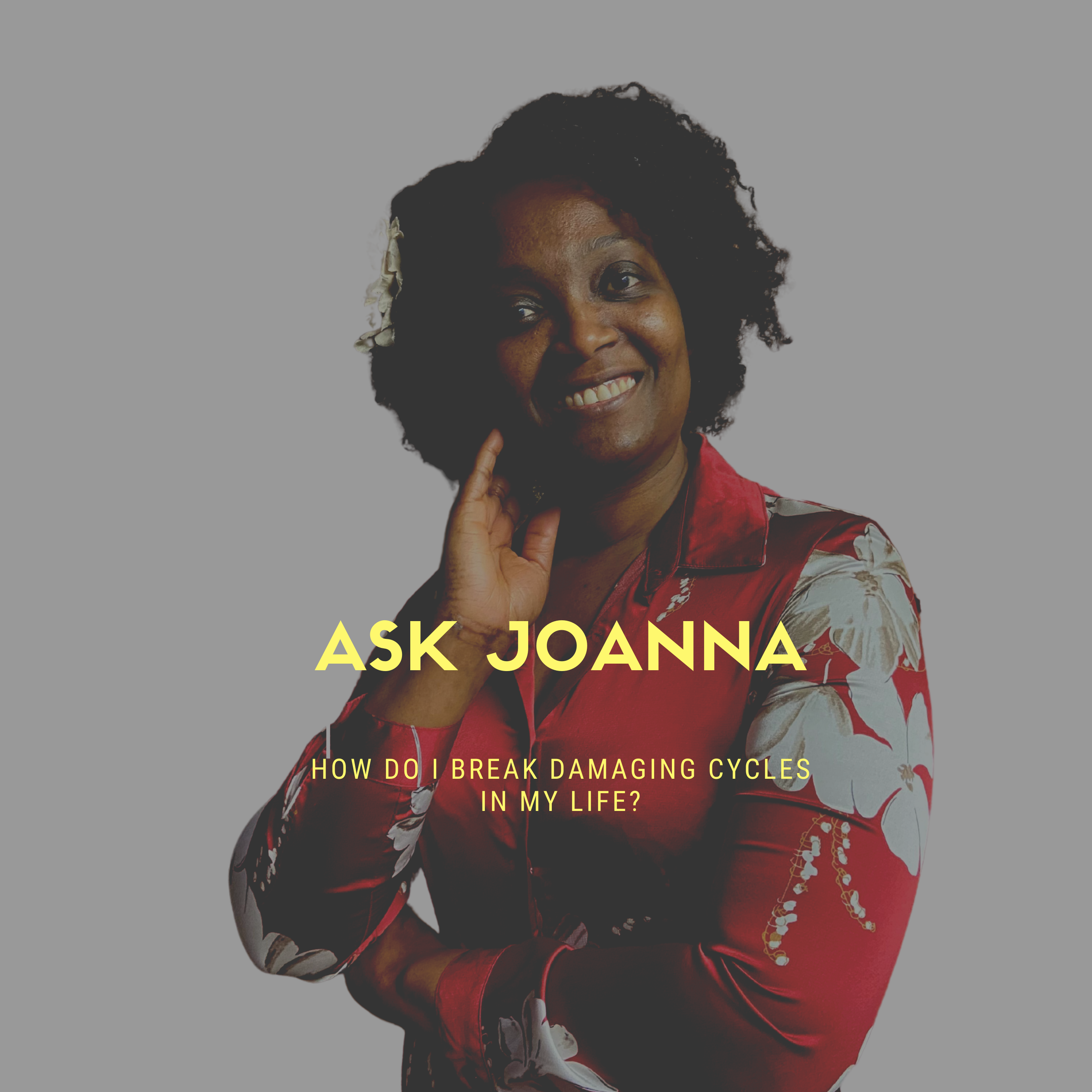
  • How do I Break Damaging Cycles in my Life?

    How do I Break Damaging Cycles in my Life?

    Jo, what’s the way out for those who subconsciously generate chaos because it is what they have become familiar with, and without it, they struggle to function optimally? /how do they return to a state of feeling comfortable with calm and performing well there rather than self-sabotaging? by creating chaos?

    I received this question earlier today and decided to answer it here on the Blog.  

    The short answer to the question is that the brain is used to chaos and work to keep you in what’s familiar. Anything other than what you are used to will feel alien, uncomfortable and wrong.

    On a conscious level, you want the opposite to chaos, but when you are in turmoil, the subconscious mind is in complete control, helping you to stay with what’s familiar.

    Any change will require developing the ability to sit with discomfort and utilise tools to help you work through the pain until you train your mind to get used to something else.

    For example, a person raised in poverty will have to work hard at not repeating patterns to keep them poor because that’s what’s familiar. This person might say things like, ‘I don’t like budgeting. They might work hard and earn a lot of money but struggles to retain what they make.

    Breaking that cycle will take training, unlearning and relearning money management skills, tackling their money story and constantly aware of how the feeling of dread can pop up at any time.

    Likewise, the person dealing with the chaos described in the question needs to be alert to the root of the problem and begin learning how to change.

    Be aware that the thought of change will feel threatening and almost precarious. You are trapped in your old patterns because when the Amygdala senses a threat, it activates the sympathetic nervous system, which puts you in your fight or flight response; this initiates your automatic reaction.  

    This reaction keeps you in fight/flight mode. The decision to chose your automatic response is a split-second decision. This effect will be so natural that you will sometimes act before it’s a conscious thought. That is why chaos shows up so often instead of the calm you desire.  

    When you chose chaos, it means the Amagadla is entirely in charge. Calm is a frontal lobe activity, and when the Amagadla kicks in, the frontal love is offline. Therefore, you will naturally do what is familiar, even if you desire something else. However, the more you practice the behaviour you want, your brain will get accustomed to it and eventually, you achieve the calm you desire.

    You achieve the change by learning things that soothe the Sympathic system and give you back control of your frontal lobe, where you do your reasoning, thinking and decision making. 

    How do they return to a state of feeling comfortable with calm and performing well there rather than self-sabotaging? 

    Achieving a state where you feel calm might take some time. Initially, you might feel overwhelmed, anxious, sad or even angry. The desire will always be to return to your old ways of responding. Despite that working through the discomfort will eventually become your new normal. 

    Address the root, and change will follow.

    The chaos probably started early in life, and because of that experience, you recreate scenarios that keep you in that state of confusion.

    You will choose calm when you continually do so; managing feelings and knowing your automatic response is vital to change; this is called self-regulation.

    Our actions are complex, and what influences them is also not simple, but as you practice being aware of thoughts and feelings and commit to understanding yourself, you train your brain and nervous system to get used to the new normal.

    For more on recognizing patterns and what to do to heal, join my next program flourish.

  • Is There A Place For Pain in Your Church?

    As a Counsellor, I get to work with people who’ve experienced a range of traumas like: sexual abuse, in all its forms; domestic violence; rejection; abandonment and childhood trauma in its entirety.

    Karen Saakvitne defined psychological trauma as “the unique individual experience of an event, a series of events, or a set of enduring conditions in which:

    • The individual’s ability to tolerate or integrate the emotional and physical experience is overwhelmed, and or
    • The individual experiences a sense of threat to life, bodily integrity or sanity.”

    Some enduring conditions are things such as racism, domestic abuse, and sexual abuse.

    I believe when faced with enduring conditions, the church should be a safe place to escape. Even for those couple of hours every week, the church should be the one place people can go to find relief.

    However, now and again, I am reminded that the church needs a lot of education before it can appropriately support the people who need it the most. These realisations are startling, sad and disheartening.

    There is no place for pain in church.

    Victims of abuse

    The church should be the place where the women who are in an abusive relationship can find comfort: a space to heal and find safety from the abuser. What usually happens is that the woman has to leave her church family either because they are unable to support her or they’ve taken the side of the perpetrator.

    The church should be a safe space where the young girl abused and pregnant can discuss her next steps without being judged, criticised or ostracised. She probably knows what scripture says, but can she talk about the pain in your pews? Can she talk about the impact of the abuse? Can she wonder how to love an unborn child created through violence? Can you cry with her and hold her until she makes a decision that will impact both her and the unborn child?

    Can she wonder how and where?

    Can you be the representative of God to her showing the love that she needs in that time of crisis?

    Can you help her when she rejects herself and the child? Can you help her through the hate?

    Can you make room for her anger?

    Is there a place in your church for that kind of pain?

    Racial trauma

    Is there space in your church to be fully known? Can the black woman take all of her to church? Can she talk about her experiences out in the world without being dismissed?

    As a Christian woman, I know how to use the Bible as a tool to help me get through awkward life moments. In my early twenties, when the religion of my parents could no longer sustain me, I took the deliberate decision to get to know God for myself. Through that process, I get to know Him as kind, compassionate, caring and ready to listen. He is the epitome of don’t rush. What I learn is at odds with what the church represents today.

    As a youth, I often hear that the church is a hospital; it’s a refuge, some say. Lets witness and get people in but I am wondering whether we are ready for the people who will come.

    For example, in a world where there is crisis, one after the other, it cannot be business as usual at church. We have to be able to hear the pain of everyone. Though the conversation might be awkward, according to Isiah 58, we have to position ourselves to be the bridge to people in all kinds of circumstances.

    However, when it relates to racial trauma, there is tone-deafness that feels cruel, unkind and unchristlike.

    Every day it’s become more apparent to me that church is not a safe place for my pain. No place for me as a black woman to be fully known. No place to talk about the pain of systematic racism and the impact of injustice.

    I work with trauma survivors and help them understand and respond to triggers; I help them have a regulated nervous system and live with the tools to live safely in their environment.

    I cannot ignore the fact that as a black woman that’s also crucial for me. Dealing with and managing r acial trauma is not so easy because the threats are everywhere.

    The brain is on constant alert 

    When we sense a threat in response to a trigger, we respond instinctively from the most primitive place in the mind.

    “Like all animals, we humans are oriented to survival. When we sense a threat, we are wired to fight or flee – or freeze, in dire circumstances. The fight or flight response is mediated by the brain stem and by the amygdala, a tiny almond-shaped area in the limbic system deep in the brain.” – Mona Dekoven Fishbane

    It’s an automatic response, but most churches would ignore that. Some Christians would tell me that I shouldn’t feel the way I do.

    The world isn’t a safe place when you are a black person; there are dangers everywhere. 

    When you feel the same threats of danger in the church that you experience everywhere else, then there’s a problem.

    Silence can give the perception of danger as much as a look or verbal attack. Our bodies response to anticipated risk, the kind a woman feels who is triggered by the memory of abuse. Or the woman who sees her abusive partner for the first time since leaving; the impact of the violent parent; the triggers from an accident.

    For black and brown people, we often live with that sense of danger. For some of us, our nervous system is on constant alert. It’s tripped the minute we enter the supermarket, walk in the park, take a taxi, visit the doctor, go shopping or do typical day to day activities. It pains me that we now have to consider the church as part of that list.

    Church people, pastors, leaders would want me to think that it’s wrong for my body to have those natural, healthy responses.

    “Don’t feel like that.”

    “Think this instead.”

    Environment

    As humans, we are hyper-vigilant to both inside and outside threats. The feeling of safety or fear is environmentally driven, and we go into fight-flight or freeze response automatically.

    During those times the part of my brain that makes logical decisions are offline when we feel threatened.

    I can learn to manage and moderate, but with dangers everywhere, this can be a full-time job. Some people’s hypervigilance can become anxiety, depression or other mental health problems.

    How do you become a bridge?

    I won’t pretend to know all the resources needed for bridge-building, but I know that our whole self is required.

    Making room to talk to and listen to people in pain. Not by giving a bandaid with a barrage of scriptures but with really sitting in the discomfort and allow others to share their experiences.

    “Is not this the fast that I have chosen? to loose the bands of wickedness, to undo the heavy burdens, and to let the oppressed go free, and that ye break every yoke.” Isaiah 58: 6