Tag: healing

  • Three Steps to Overcome Fear

    Three Steps to Overcome Fear

    It seems natural for some people to encourage others to show strength. Some of these encouragers have never had to demonstrate this kind of courage.  However, they feel justified in giving others advice on courage.  

    It is also easy to tell someone to chin up’, don’t be afraid when you’ve never tested your theory.  Some people know the potential of fear but shrink from its intensity and therefore makes no effort to walk through the pain to discover what is on the other side.

    These persons dispense advice freely and sometimes responds harshly to people who struggle with despair.   With this group, they are impatient and often unforgiving and wrestle with understanding why their opinion is discarded. 

    If you are struggling with I fear, I understand, the fight is real.  The battle to maintain a positive mindset and attitude amid trauma or disappointment is challenging.

    However, it is possible to allow yourself to feel the fear and manage the overwhelming emotions that accompany it.  Here are three things you could begin to try now.

    1. Be patient

    Be patient with you, whatever that thing is that has triggered fear it’s real, unravelling it might take time and patience.  Permit yourself to take the time that is needed.

    2. Be understanding

    Show yourself empathy and care. Be supportive of your efforts to understand the root of the problem so that you can create change.  Understand that fear might be a learnt response and to get past it you will need to be focus and consistent.

    3. Be honest

    Be honest with where you are and how you are feeling.  Take frequent inventory of your thoughts and feelings. Owning them will help you to be able to let go of them and find a resolution.

    There will probably be some element of fear in most areas of life. Applying the strategies above could help.


  • Overcome Negative Messages with this tip

    Overcome Negative Messages with this tip

    There’s always an influx of negative stories running in the background for most of us. For those who experienced childhood trauma, these messages can flow continuously and can be debilitating for a lot of people.

    Negative messages are subtle and repetitive. They mostly occur around certain times and events. Whether it is a sound, sight, smell, a familiar face or taste, it could be any number of triggers. It is sometimes difficult to identify a particular trigger because they are subtle and easily missed.

    If you would like to know what leads your thoughts down a particular path, take time to study yourself. Pay attention to those things that annoy or make you sad. You can also reflect on things after the fact and honestly scrutinise the events of that day to find what started you down the path of low moods or irritation.

    Sometimes we might fear to identify the trigger. You may have a story around the particular event. For example, you may have been told that you are lazy when you make a mistake. This would influence distorted thinking. You may not decide to think of yourself in these terms but might catch yourself doing so before you had time to think. These general statements such as ‘ I always make mistakes’ are called globalisation. No one always does anything, so chances are there will be times when you don’t make mistakes.
    However, because you’ve been trained to think of you in the negative, you wouldn’t naturally challenge those thoughts.

    Brain
    That’s where the beauty of the mind can help. According to neuroplasticity, You can create new pathways and change the old harmful way of thinking.
    Let’s take the thought ‘I always make mistakes’. Say these instead. Everyone makes mistakes. That’s normalising the negative statements.

    If everyone makes them, then it’s not a particular character defect, or something unable to change.

    You could also think, ‘I can learn from my mistake’ Some of those comforts we enjoy today. Like electricity, was not invented on the first try.

    You try it.

    Think of your repetitive message.
    When does it usually show up?
    How does it make you feel?
    How can you challenge those thoughts?
    Now tell yourself what’s true
    Practice, practice, practice, until challenging your thoughts to become a regular part of yourself talk.

    If you would like help to permanently turn off those negative messages we have just the tool for you. Our Emotional Well-being bundle comes with three audios. One is focused on developing positive thoughts. Get the bundle HERE

  • Rescue me

    Rescue me

    Every interaction has two participants. Sometimes these interactions are unhealthy and damaging.

    Sometimes persons will battle to defend their patterns and roles, even when these are present in toxic relationships. Identifying which position you play could be an essential key in freeing you from situations that have held you captive.

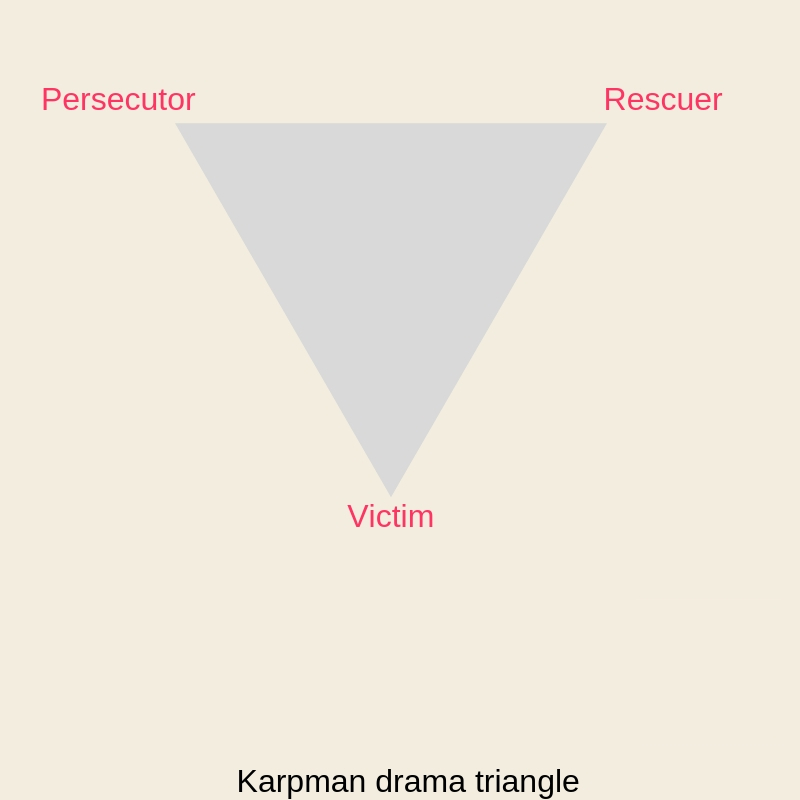
    Recently I did a workshop talking people through Karpman’s drama triangle. The goal of the workshop was to help participants identify where they were on the triangle and use the tools I share to break free. Throughout the seminar people owned their positions; many were surprised when they saw where they fitted. They could also recognise their partner’s status and felt hopeful about change.

    Below is a brief description of the items on the triangle.

    Victim – The victim has no boundaries, often has a sense of hopelessness, struggles to take responsibility and blames others for their mistakes.

    Persecutor – The persecutor often has internal conflict, struggles with anger, often act entitled and fails to take responsibility for their actions.

    Rescuer – Underneath the doing the rescuer harbours feelings of inadequacy. They are people pleasers, often co-dependent and struggles with low self-worth.

    During the workshop, one woman said ‘I am a persecutor, and my husband is the victim/rescuer’. I believe awareness is a big part of the change. We cannot change until we become aware of what needs replacing.
    However, the transition can be challenging, especially when we have lived in a role for many years. Even though it might be unhealthy, it is all we’ve known. The daunting prospect of learning and implementing new skills can seem daunting.

    Often this is where persons struggle and ends up justifying why they do what they do. They also challenge the need to change by citing statistics and give evidence of things that happened when they tried to reform.
    For example, the rescuer might feel like there will be no one else to do the job they do. The overriding thought is ‘if I don’t do it no one will.’
    To change.
    The rescuer needs to identify why they chose the position they decided and learn steps to break free.

    • Here are some core values of a rescuer
    • The only person I can depend on is me.
    • If I don’t do it, no one will
    • If I don’t do it, it won’t be done properly
    • The needs of others are more important than mine
    • Struggles with feelings of inadequacy
    • Suffers from guilt
    • Gets value and purpose from other feedback

    Each position on the triangle is grounded in dysfunction. These roles usually show up in dysfunctional relations without boundaries and are often damaging to one or both participants.

  • Forgiveness is a Gift

    Forgiveness is a Gift

    I’ve heard many sermons, talks and presentations on forgiveness. Unfortunately many tackle this necessary topic without seemingly caring about the pain endured.  Additionally, they offer little comfort to the wounded.

    The message on forgiveness usually favours the abuser. The victim’s take away the lesson that their forgiveness free’s the abuser from any punishment for their wrong.

    Forgiveness seems to exonerate the perpetrator from guilt, responsibility or the need for repentance. Rarely do we hear the cry for the abuser to apologise and seek forgiveness. Rather the onus always on the victim?

     I believe in forgiveness. I believe that my ability to forgive frees me. I also think that as we help people to walk through their pain, they will naturally arrive at the place where they can forgive without being pushed or frightened.

     Sometimes the emphasis on the victim forgiving cause many who are hurting to struggle to see where Christ fits in their suffering. If people with religious authority tells you to forgive, offers no sympathy for the wound you carry and fails to acknowledge the pain of your experience, this could be extremely disheartening.

    Now I don’t claim to be a bible scholar, but I’ve learnt a few things about Jesus that tells me He doesn’t share their opinion. His heat is tender towards you, and He cares for the brokenhearted.

    You have no responsibility towards the abuser. However, forgiveness is a gift that we offer to ourselves and others. Gifts are unexpected and rarely deserved it’s the thoughtfulness and care on the part of the giver that imparts gifts.

    For you to be able to give that gift, you first have to receive it.

    It is essential that you allow yourself to heal. Through that process, you will get to the place where you desire to give the gift.