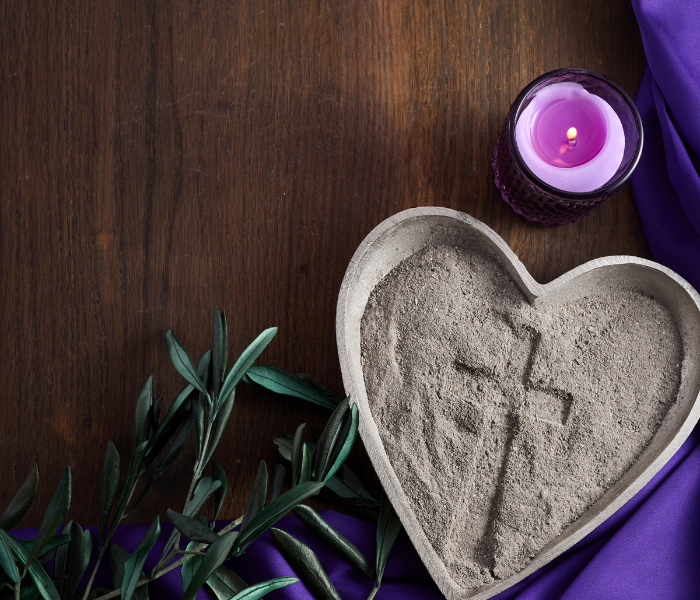
Beauty For Ashes
There are seasons in life when it can feel like everything consistent and safe starts to feel unsafe. The plans we trusted collapsed. Relationships fracture. Old coping mechanisms stop working. The masks we wore to survive begin to crack. And in the middle of it all, we are left standing in the ashes, wondering where God is.
Many people believe they must clean themselves up before coming to Him. They think they need stronger faith, better habits, or more certainty before they can approach God honestly. But healing rarely begins in perfection. Healing begins in truth.
Finding God in the ashes means meeting Him in the places we tried to hide.
It is learning that He is not frightened by our grief, our anger, our confusion, or our questions. He does not turn away from wounded hearts. Scripture reminds us that “The Lord is close to the brokenhearted and saves those who are crushed in spirit.” Ps. 147:3 God draws near to people who are honest enough to admit they are hurting.
John believed what David said in Ps 147:3 and held his heart and collapsed in joy when I read 2 Corinthians 12:9 “And he said unto me, My grace is sufficient for thee: for my strength is made perfect in weakness. Most gladly therefore will I rather glory in my infirmities, that the power of Christ may rest upon me.” For the first time, he believed that God could help him with his addictions, that he wasn’t alone, abandoned and rejected by God.
For the first time, he felt safe enough to feel and to not be ashamed of triggers. “For He made Him who knew no sin to be sin for us, that we might become the righteousness of God in Him.” 2 Corinthians 5:21. These verses moved from words on the page to have real meaning for him; they offered real solutions to a problem he struggled with for years.
Feeling our feelings
So many of us learned to survive by disconnecting from ourselves. We silenced emotions because they felt unsafe. We became people pleasers to avoid rejection. We learned hyper-independence because trusting others once led to disappointment or pain. We go into relationships with this version of ourselves, and when those relationships fail, we blame God. Some of us learned to perform spirituality instead of living in an authentic relationship with God.
It takes courage to do the work of finding God in the ashes of our trauma and mistakes, or even to look at the ashes. Looking might mean learning about who you really are when you’re not people pleasing, learning to stand in the discomfort of not fixing, rescuing or giving until it hurts.
When you begin the journey of understanding what led you to this place, you can begin to ask deeper questions:
Why am I still carrying this fear?
Why do I struggle to trust?
Why do I keep repeating unhealthy patterns?
Why do I feel disconnected from God, myself, and others?
These questions are not signs of failure. They are invitations.
God often begins His deepest work in the ashes of what no longer works.
Healing requires honesty. Not polished honesty. Real honesty. The kind that says:
“I am struggling.”
“I am angry.”
“I am afraid.”
“I don’t know how to trust.”
“I have wounds I never dealt with.”
“I learned unhealthy ways of coping.”
“I want healing, but I don’t know where to begin.”
This kind of vulnerability can feel terrifying because many people grew up in environments where honesty was punished. Perhaps your emotions were dismissed. Maybe your mistakes were used against you. Maybe vulnerability was met with shame instead of compassion.
That is why healing cannot happen in isolation.
We need safe communities.
Not a community that demands perfection. Not spaces where people hide behind performance and pretend they are fine. We need people who can sit with our stories without judgment. People who can listen without trying to control, shame, or fix us. People who understand that growth is messy.
A healthy community creates room for both accountability and grace.
It allows us to say, “I was wrong,” without fear of rejection.
It allows us to unlearn survival patterns that once protected us but now keep us disconnected.
It teaches us how to regulate emotions instead of suppressing them.
It helps us rebuild trust slowly and safely.
One of the hardest parts of healing is recognising that some of what we learned growing up was unhealthy, even if it was normal in our environment.
Many people learned that love had to be earned.
That emotions were weak.
That rest was laziness.
That boundaries were selfish.
That mistakes defined their worth.
Healing requires unlearning these beliefs and relearning healthier ways of living.
This process is deeply spiritual because God is not only concerned with behaviour; He cares about the condition of the heart. He wants to heal the roots, not just manage the symptoms.
Sometimes the distrust we carry toward God is connected to the wounds we experienced with people. If authority figures were harsh, distant, inconsistent, or unsafe, it can become difficult to believe that God is truly loving and trustworthy.
This is why inner healing matters.
The wounded inner child within us still remembers rejection, abandonment, criticism, fear, and loneliness. Even as adults, those unhealed places can shape our reactions, relationships, and view of God.
Healing the inner child is not about becoming trapped in the past. It is about allowing God access to the places where pain interrupted healthy development. It is learning to grieve what we did not receive while also allowing Him to rebuild what was broken.
As we heal, trust begins to grow again.
Not overnight.
Not perfectly.
But gradually.
We begin to trust that God is patient with our process.
We trust that honesty will not separate us from His love.
We trust that our story still has purpose.
We trust that healing is possible.
We trust that we no longer have to carry shame alone.
Finding God in the ashes does not mean pretending the fire never happened. It means discovering that even there — in the grief, the disappointment, the rebuilding, and the surrender — He was present.
Sometimes the ashes become the very place where we finally stop performing and start healing.
And in that sacred place of honesty, community, unlearning, and restoration, we discover something beautiful:
God was never waiting for a perfect version of us.
He was waiting for the real us to come home.
If you’re looking for a safe place to begin your journey, join our community – https://chat.whatsapp.com/GWhYRtz067N4c1cgQ8SvfH
