The Antidote For Loneliness
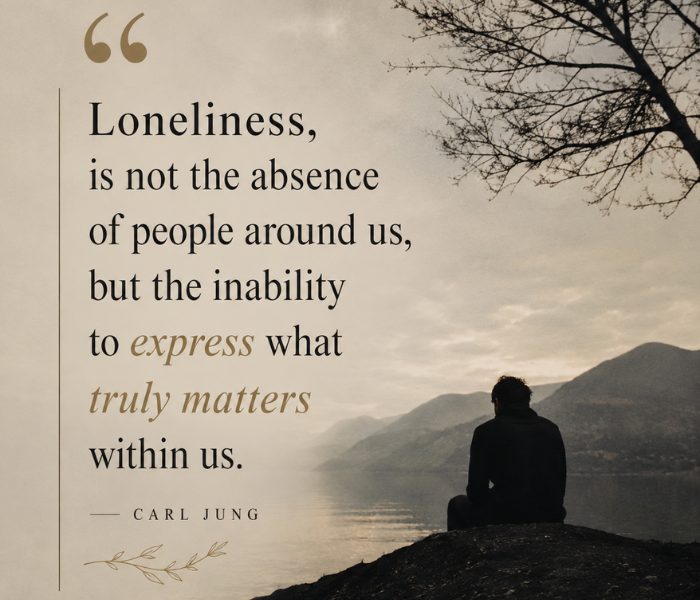
Carl Jung once wrote, “Loneliness is not the absence of people around us, but the inability to express what truly matters within us.” There is something deeply piercing about those words because many people know what it feels like to sit in a crowded room and still feel unseen. To be surrounded by family, church members, colleagues, or even friends, yet quietly carry thoughts, fears, grief, shame, or struggles that never find language.
Loneliness is not always isolation. Sometimes loneliness is silence.
In my work around attachment, emotional health, and secure connection, I have seen that one of the deepest human needs is not simply to be around others, but to feel emotionally safe enough to be known. We long for spaces where we do not have to perform, hide, shrink ourselves, or edit our pain or our stories to belong.
This is why healthy community can become an antidote to loneliness.
Not a perfect community. Not a performance-based community. Not communities where people wear masks and quote clichés while silently struggling underneath. But emotionally safe communities where vulnerability is met with compassion instead of judgment.
Many of us learned early in life that expressing what truly mattered was unsafe. Perhaps our emotions were dismissed. Perhaps we were shamed for crying, ignored when hurting, or criticised when we spoke honestly. Some of us learned to survive by becoming self-sufficient. Others learned to people-please, hide, or stay quiet to avoid rejection.
Over time, those experiences shape attachment patterns. We begin to associate vulnerability with danger.
So even when safe people enter our lives, we can struggle to trust them.
This is why courage matters so deeply in healing loneliness.
Brené Brown famously wrote, “Courage starts with showing up and letting ourselves be seen.”
That kind of courage is not loud or dramatic. Sometimes courage looks like answering honestly when someone asks, “How are you really doing?” Sometimes courage is admitting you are struggling instead of pretending you are fine. Sometimes courage is sitting in a small group, therapy room, friendship, or church community and risking honesty one sentence at a time.
Sometimes courage is the community that can hold those disclosures without judgment.
Healing often begins with small moments of safe disclosure.
The beautiful thing about secure relationships is that they help rewrite the stories we carry about connection. When someone listens without shaming us, dismissing us, or trying to fix us immediately, our nervous system begins to learn something new: maybe connection is safe after all.
This is one reason community is so powerful.
A healthy community gives us mirrors. It reminds us we are not alone in our fears, grief, struggles, or questions. So many people carry private shame because they believe they are the only ones wrestling with anxiety, marriage difficulties, parenting struggles, trauma triggers, loneliness, or doubt. But when safe people begin sharing honestly, it creates permission for others to do the same.
Vulnerability is contagious.
One person’s courage can unlock another person’s healing.
I often think about how Jesus built community. He did not gather perfect people. He gathered people with wounds, fears, failures, questions, and complicated stories. Around him, people found space to tell the truth. The woman at the well spoke about her broken relationships. Blind Bartimaeus cried out publicly for mercy. Peter admitted fear and failure. Thomas voiced doubt.
Jesus created relational safety.
And that matters because people flourish where honesty is welcomed.
Unfortunately, many communities unintentionally reinforce loneliness because they prioritise image over authenticity. When people feel they must always appear strong, spiritual, successful, or emotionally “together,” they begin hiding the very parts of themselves that need connection the most.
True community does not demand perfection before belonging.
True community makes room for humanity.
This does not mean we share everything with everyone immediately. Trust is built gradually and wisely. Emotional safety grows over time through consistency, empathy, and care. But healing relationships often begin when someone chooses courage, and another person responds with compassion.
That is how secure attachment grows.
It is built in moments where people feel seen, heard, soothed, and safe.
For many people, loneliness will not end simply by being around more people. It will begin to heal when they find spaces where they can slowly express what truly matters within them without fear of rejection.
This is why emotionally healthy communities matter so deeply in families, friendships, churches, and support groups. They become places where people can remove masks. Places where grief and joy can coexist. Places where someone can say, “I’m struggling,” and hear the response, “You do not have to carry this alone.”
In a world where so many people feel disconnected, courage and community work hand in hand.
Courage says, “I will risk being seen.”
Community replies, “You are safe here.”
And sometimes, that is where loneliness finally begins to loosen its grip.
If you would like a safe community to begin or continue healing, join the Wounds to Scars book club. The book club meets Tuesdays and Thursdays at 7 PM (UK) / 2 PM (EDT)
